


What Are Interpersonal Skills
In the modern digital-first era, where remote working, freelancing, online collaboration tools, and global work teams are the new reality of the working environment, technical expertise is no longer in the singular.
Its are becoming an important hiring and retention indicator in organizations. The LinkedIn hiring data indicate that ninety-two percent of talent specialists believe that soft skills are as important or more vital in hiring decisions as hard skills.
It is a comprehensive guide that has research-based solutions to all those questions using tables, structures, and practical plans.
Table of Contents
What Are Interpersonal Skills?
It also known as people skills or social intelligence skills are the skills that help individuals to:
- Communicate effectively
- Collaborate with others
- Understand emotions
- Manage relationships
- Resolve conflicts
- Influence decisions
In simple terms:
It represent the communication and behavioral skills that you apply to interact with and work with other people effectively either in personal or working life.
These skills are used daily in:
- Workplace collaboration
- Client communication
- Team projects
- Negotiations
- Leadership roles
- Networking situations
They include both:
| Skill Type | Description | Example |
| Verbal Communication | Speaking clearly and persuasively | Explaining project updates |
| Non-Verbal Communication | Body language & tone | Maintaining eye contact |
| Emotional Intelligence | Managing emotions | Staying calm in meetings |
| Listening Skills | Understanding others | Active listening |
| Conflict Management | Handling disagreements | Mediating disputes |
| Team Collaboration | Working together | Agile teamwork |
The interaction with people either colleagues, customers, or other stakeholders is essential in most careers today and reason why interpersonal skills are essential to the growth of professionals and the productivity of teams.
Types of Interpersonal Skills
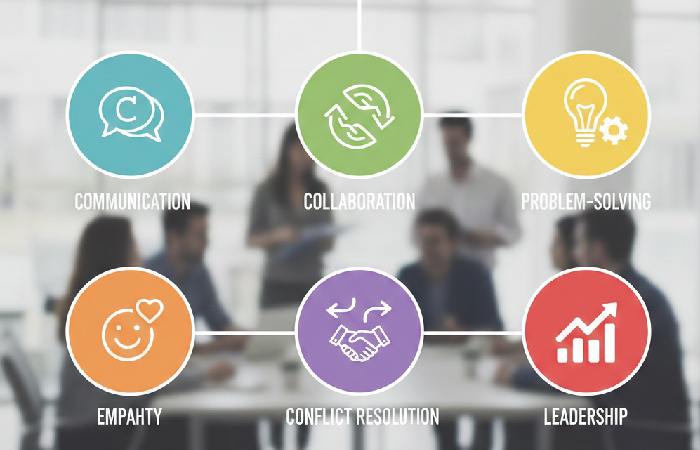
Its are not a single competency. They are a combination of multiple behavioral abilities that determine how effectively you interact with others.
Core Interpersonal Skills Framework
| Category | Skill Included | Use Case |
| Communication | Verbal, Written, Listening | Presentations |
| Emotional Intelligence | Empathy, Self-Awareness | Leadership |
| Collaboration | Teamwork, Adaptability | Group Projects |
| Leadership | Decision-Making, Motivation | Management |
| Conflict Resolution | Negotiation, Mediation | HR Discussions |
| Relationship Building | Networking, Trust | Client Relations |
Top Skills Employers Look For
Based on analysis of job listings and hiring trends across industries:
Most In-Demand Interpersonal Skills
- Active Listening
- Teamwork
- Leadership
- Empathy
- Flexibility
- Dependability
- Negotiation
- Conflict Resolution
- Motivation
- Responsibility
Strong interpersonal abilities help employees:
- Adjust their communication style
- Understand team dynamics
- Collaborate more effectively
- Navigate workplace changes
These are the skills that greatly affect the work performance and the working culture.
Importance of Interpersonal Skills in the Workplace
Its are essential for:
- Team productivity
- Organizational communication
- Project execution
- Client satisfaction
- Leadership development
They enable individuals to:
- Build trust with colleagues
- Improve collaboration
- Adapt to evolving priorities
- Resolve disagreements constructively
Employees with strong interpersonal competencies tend to:
- Work better in teams
- Develop strong professional relationships
- Communicate more efficiently
- Advance faster in careers
Interpersonal communication is significantly important in personal and professional achievements, as it assists people to play well in a team and create long-term relations with others. (atlassian)
Examples of Interpersonal Skills Companies
India
| Company Name | Headquarters | Key Services | Industries Served | Website |
| NIIT Limited | Gurugram | Soft skills, leadership, communication, teamwork | IT, BFSI, corporate | niit.com |
| Mentora India | Mumbai | Interpersonal skills, leadership, team building | Corporate, startups | mentora.in |
| Dishah Consultants | Ahmedabad | Emotional intelligence, communication, teamwork | Sales, HR, corporate | dishahconsultants.com |
| Soft Skills India | India | Interpersonal & team skills, cross-cultural skills | Corporate, education | softskillsindia.org |
| Morpho Thinkers | Bengaluru | Communication, negotiation, personality development | Professionals, managers | morphothinkers.com |
| TDA Learning and Development | India | Emotional intelligence, conflict resolution | Corporate | tdaindia.com |
| Cogito Training and Counselling | Mumbai | Behavioural training, communication, leadership | Corporate, executives | cogitoindia.com |
| Ergodemy | India | Interpersonal and communication training | IT, management | ergodemy.com |
UK
| Company Name | Headquarters | Key Services | Industries Served | Website |
| Impact Factory | London | Communication, emotional intelligence, assertiveness, conflict management | Corporate, leadership | impactfactory.com |
| Redcliffe Training | London | Leadership, teamwork, interpersonal and communication skills | Corporate, finance | redcliffetraining.com |
| Newleaf Associates | Edinburgh | Personal development, relationship building, presentations | Corporate | newleaf-associates.com |
| Gould Training | UK | Emotional intelligence, communication, conflict resolution | Managers, teams | gouldtraining.co.uk |
| London Soft Skills | London | Leadership, teamwork, decision-making, interpersonal development | Professionals | londonsoftskills.com |
| Video Arts | London | E-learning, behavioural skills, workplace communication | Global corporate | videoarts.com |
| Learndirect | Bournemouth | Online courses, communication and professional development | Students, professionals | learndirect.com |
| Virti | UK | AI role-play training, scenario-based communication | Healthcare, sales | virti.com |
| In Touch Networks | Manchester | Networking, coaching, career and interpersonal development | Professionals | intouchnetworks.com |
Interpersonal Skills vs Technical Skills
| Parameter | Interpersonal Skills | Technical Skills |
| Nature | Behavioral | Functional |
| Learnability | Continuous improvement | Training-based |
| Use Case | Communication | Execution |
| Measurement | Subjective | Objective |
| Career Impact | Long-Term | Short-Term |
| Role | Team Success | Task Completion |
Impact on Career Growth
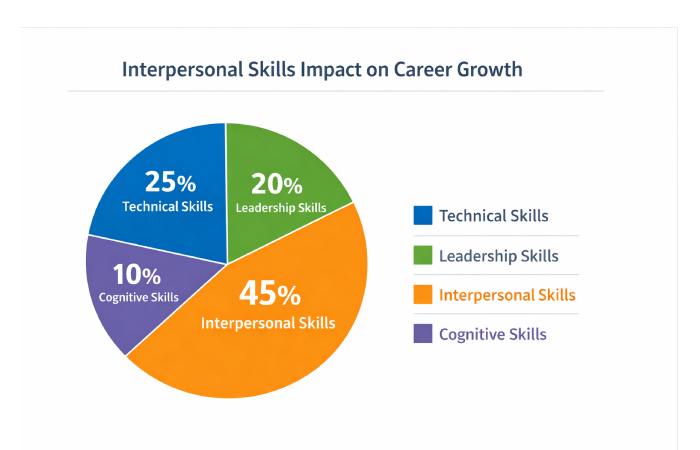
Below is an estimated professional performance impact distribution based on HR competency models:
| Skill Area | Contribution to Career Success |
| Technical Skills | 25% |
| Interpersonal Skills | 45% |
| Leadership Skills | 20% |
| Cognitive Skills | 10% |
Real-Life Examples of Interpersonal Skills
| Scenario | Skill Used |
| Client Presentation | Communication |
| Team Deadline Issue | Conflict Resolution |
| Product Brainstorming | Collaboration |
| Manager Feedback | Emotional Intelligence |
| Sales Negotiation | Persuasion |
| Remote Meetings | Adaptability |
Benefits of Strong Interpersonal Skills
Professional Benefits
- Improved leadership potential
- Higher job retention
- Increased workplace productivity
- Better client relationships
- Strong networking opportunities
Personal Benefits
- Effective communication
- Improved social confidence
- Emotional stability
- Better decision-making
- Reduced workplace stress
They are especially important in modern collaborative work environments such as agile teams and cross-functional departments. (Indeed)
Interpersonal Skills Needed in Digital Careers
With remote jobs and freelance ecosystems growing rapidly:
| Digital Role | Required Interpersonal Skills |
| Content Writer | Communication |
| Digital Marketer | Persuasion |
| Developer | Teamwork |
| Freelancer | Client Management |
| Product Manager | Leadership |
| UX Designer | Empathy |
How to Improve it?
Step-by-Step Development Strategy
Improve Communication
- Practice clarity in speech
- Avoid jargon in discussions
- Use open-ended questions
Practice Active Listening
- Maintain eye contact
- Avoid interrupting
- Reflect back information
Develop Emotional Intelligence
- Identify emotional triggers
- Practice empathy
- Manage reactions
Build Teamwork Skills
- Participate in group projects
- Accept feedback
- Adapt communication styles
Enhance Conflict Resolution
- Focus on solutions
- Avoid personal criticism
- Encourage dialogue
Interpersonal Skills Training Cost Comparison
| Training Type | Average Cost (India) | Duration |
| Online Courses | ₹1,500 – ₹5,000 | 4–6 Weeks |
| Workshops | ₹8,000 – ₹20,000 | 2–5 Days |
| Corporate Training | ₹25,000+ | Custom |
| Coaching Programs | ₹15,000 – ₹40,000 | 2–3 Months |
Future Scope (2026–2030)
As automation increases:
- AI will replace repetitive tasks
- Humans will manage relationships
- Communication will become a core skill
- Emotional intelligence will drive leadership
It will continue to:
- Enhance employability
- Improve leadership capabilities
- Support collaborative work environments
- Increase professional adaptability
Frequently Asked Questions (FAQs)
What are interpersonal skills in simple words?
Its are those skills that assist you to communicate, interact, and to work efficiently with other individuals. These are such skills as communication, teamwork, empathy, listening, and conflict resolution skills which can help you to establish good personal and professional relationships.
Why are interpersonal skills important in the workplace?
The significance of interpersonal skills is that they:
- Improve team collaboration
- Help resolve workplace conflicts
- Enhance communication
- Increase productivity
- Strengthen professional relationships
- Improve leadership effectiveness
The workers who possess good interpersonal skills have higher chances to work and succeed within the team work environment and climb the career ladder.
What are the main types of interpersonal skills?
The major types of interpersonal skills include:
- Communication Skills
- Active Listening
- Teamwork
- Leadership
- Emotional Intelligence
- Empathy
- Conflict Resolution
- Negotiation
- Adaptability
- Problem-Solving
Both of these skills help in the process of effective communication in personal and professional life.
How do interpersonal skills affect career growth?
The play an important role in career development by:
- Enhancing leadership potential
- Improving teamwork
- Building trust with clients and colleagues
- Increasing job retention
- Supporting effective decision-making
Individuals who possess good people skills tend to be offered high job prospects and promotions than the ones who solely depend on technical skills.
Can interpersonal skills be learned or improved?
Yes, it can be developed through:
- Practice and feedback
- Communication training
- Team collaboration
- Emotional intelligence development
- Conflict resolution exercises
They can be enhanced with time through another aspect of consistent effort and self-awareness.
What is the difference between interpersonal skills and communication skills?
It include communication skills. Whereas communication is concerned with the way you pass information, it involve a wider spectrum of skills including; empathy, team work, listening, leadership and relationship management.
What are examples of interpersonal skills in real life?
Typical real life examples are:
- Working with a team on a project
- Resolving misunderstandings with colleagues
- Giving constructive feedback
- Negotiating with clients
- Supporting coworkers during stressful situations
The skills can be applied on a daily basis in the workplace and social activities.
How can I improve my interpersonal skills at work?
You can improve:
- Practicing active listening
- Maintaining positive body language
- Being open to feedback
- Managing emotions effectively
- Participating in team discussions
- Developing empathy
Your relationship at the work place can be improved by communicating mindfully.
Are interpersonal skills important for remote jobs?
Yes, its are a necessity of remote jobs since they:
- Improve virtual communication
- Help manage remote teams
- Support collaboration across locations
- Enhance client interactions
- Reduce misunderstandings in digital communication
Good interpersonal skills will also make the workflow go smoothly even in virtual environment.
Which jobs require strong interpersonal skills?
Career jobs that demand high are:
- Content Writers
- Digital Marketers
- Sales Executives
- Project Managers
- HR Professionals
- Customer Support Specialists
- Team Leaders
Its are very important in most modern careers, which involve collaboration, regardless of the industry one is working in.
Conclusion
The social skillfulness at the contemporary work place is not a choice anymore. These are critical behavioral skills that determine:
- Career growth
- Team performance
- Leadership effectiveness
- Professional relationships
The capacity to communicate, empathize, negotiate and work as a team is far more a determinant of long term success in an increasingly digital and collaborative economy than technical expertise is.
It is one of the best strategic investments you can ever make in your future career today to develop interpersonal skills.

Afiya Jafar
Afiya Jafar is a technology and digital lifestyle writer at Digital Life Hackers who focuses on making technology easier to understand and more useful in everyday life. Her work covers software, applications, online tools, gadgets, mobile technology, artificial intelligence and emerging digital trends.

Sameena Begum
Sameena Begum is a technology and digital content reviewer at Digital Life Hackers. She reviews selected articles to help improve clarity, organisation, consistency, factual presentation and overall reader usefulness.