
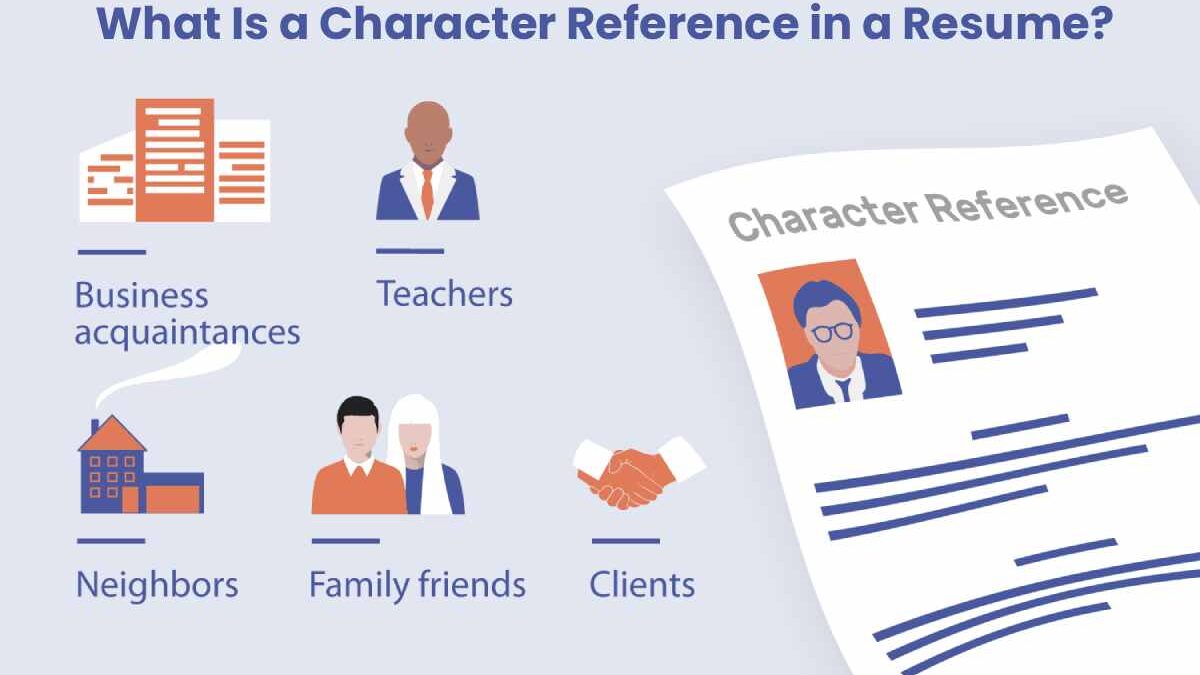
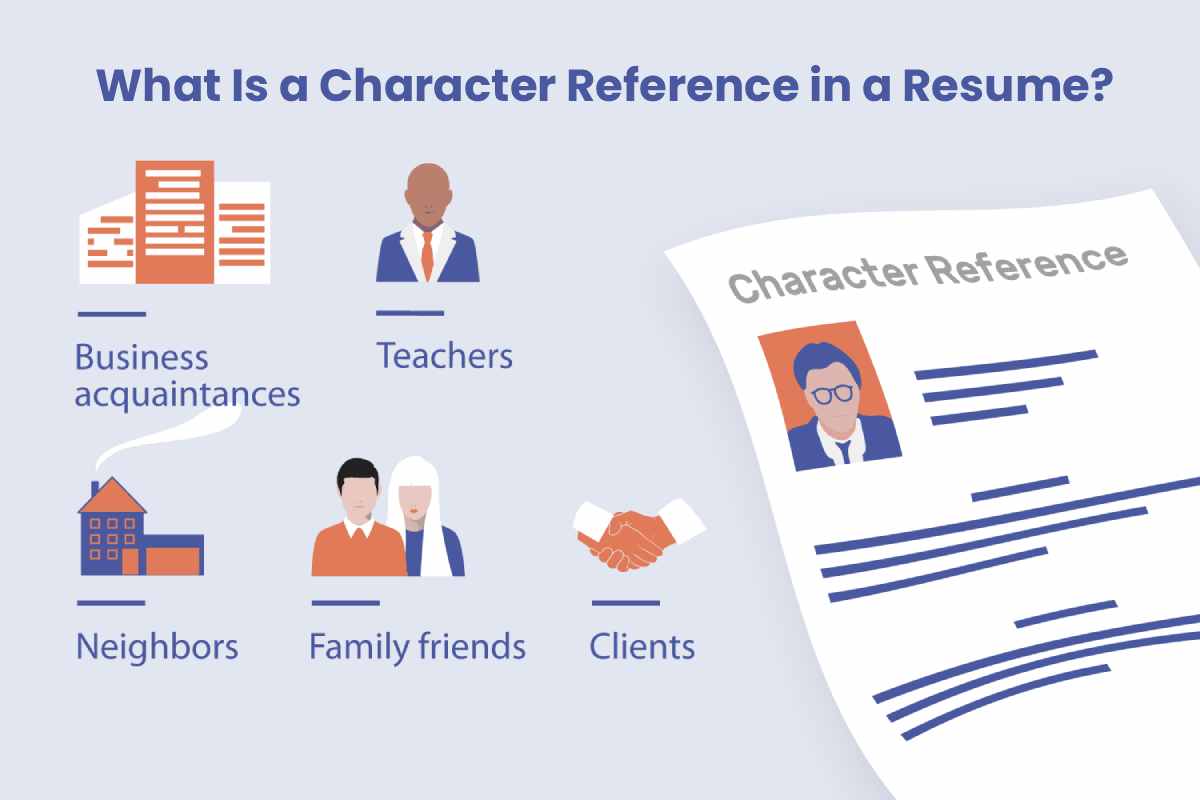
In the extremely competitive job market, it is no longer the case of the recruiter considering just the candidate based on their credentials and work experience. Employers are interested in getting to know you as an individual, what values, integrity, reliable and interpersonal behavior you have. This is the stage in which character references have a significant role in the hiring process.
When you are looking in your search engine what a character reference is in a resume, you will have this detailed guide that will take you through all you need to know. This article will cover definitions and examples, the best practices, the errors to avoid and the industry specifications in a way that will enable the job seekers to design better and more reliable resumes that can appeal to employers.
Table of Contents
What Is a Character Reference in a Resume?
Character reference is a recommendation given by a person who can attest to your personal traits, moral or conduct rather than the technical or job related skills. Character references are unlike professional references in that they are concerned with who you are and not what you have done at work.
The traits that may be brought out in a character reference include:
- Honesty and integrity
- Dependability
- Communication skills
- Leadership qualities
- Emotional intelligence
- Problem-solving mindset
The references of character prove to be particularly helpful when a job applicant has little work experience, he or she is switching jobs, or the job being sought is very much trust intensive.
Why Employers Ask for Character References
Character references are used by employers in order to minimize hiring risks. Character traits cannot be easily changed and skills can be taught. The hiring managers need to be assured that a recruit is going to act ethically, be able to get along with other people and act as a good ambassador of the organization.
Key Reasons Employers Value Character References
| Reason | Explanation |
| Trust verification | Confirms reliability and honesty |
| Cultural fit | Assesses values alignment |
| Risk reduction | Prevents problematic hires |
| Soft skill validation | Confirms teamwork and communication |
| Background support | Adds credibility beyond resume claims |
For roles involving sensitive information, customer interaction, or leadership responsibilities, character references are often weighted heavily.
Character Reference vs Professional Reference
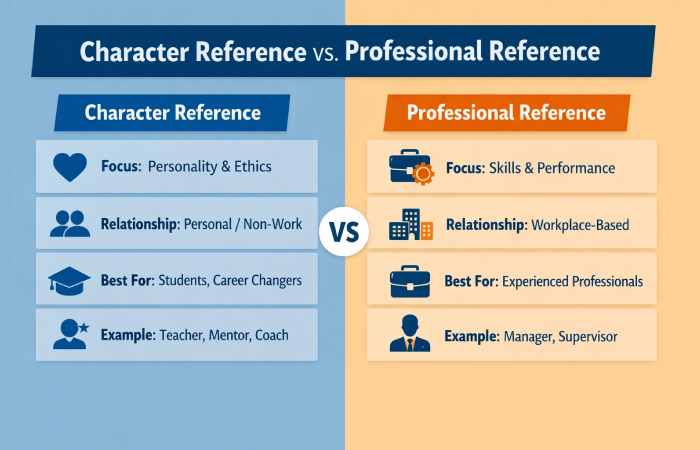
Many job seekers confuse these two types of references. Understanding the difference is critical.
| Criteria | Character Reference | Professional Reference |
| Focus | Personality and ethics | Job performance and skills |
| Relationship | Personal or non-work | Workplace-based |
| Best for | Freshers, career changers | Experienced professionals |
| Example roles | Teacher, mentor, coach | Manager, supervisor |
Both types serve different purposes and are often used together.
When Should You Include a Character Reference?
Character references are not required for every job application, but they can significantly strengthen your profile in certain situations.
Ideal Scenarios for Including Character References
- Entry-level or fresher roles
- Career transitions
- Employment gaps
- Internships and apprenticeships
- Volunteer, NGO, or social sector roles
- Government or public trust positions
If a job posting specifically requests references, you should always follow the employer’s instructions. (novoresume)
Who Can Be a Character Reference?
Choosing the right person is more important than choosing someone with a prestigious title. The reference must be credible and able to speak clearly about your character.
Suitable Character References
- Teachers or professors
- Academic advisors
- Volunteer supervisors
- Community leaders
- Coaches or trainers
- Mentors
- Former colleagues (non-managerial)
The best reference is someone who has observed your behavior consistently over time.
Who Should Not Be a Character Reference?
Avoid references that reduce credibility or raise concerns.
Unsuitable References
- Parents or siblings
- Spouse or partner
- Close friends without professional context
- Individuals unaware of your work ethic
- Someone you have lost contact with
Employers may disregard references that appear biased or informal.
How to List Character References on a Resume
Character references are usually listed on a separate page or at the end of the resume. (Indeed)
Recommended Resume Format
Character References
| Name | Relationship | Organization | Contact Information |
| Anita Sharma | Academic Mentor | XYZ University | anita@email.com |
| Rahul Mehta | Volunteer Supervisor | Green NGO | +91-XXXXXXXX |
Formatting Best Practices
- Use professional formatting
- Limit to 2–3 references
- Always ask permission
- Ensure contact details are accurate
Character Reference Letter vs Resume Reference
| Aspect | Character Reference Letter | Resume Reference |
| Length | Detailed, 1 page | Brief listing |
| Use case | Formal applications | Initial screening |
| Content | Descriptive narrative | Contact details |
| Format | Letter format | Resume table |
Some employers ask for letters later in the hiring process.
Real-World Examples of Character References
Example 1: Entry-Level Candidate
“Rohan is my academic mentor, and I have known him during the last three years. He was always responsible, disciplined, and full of integrity when dealing with individual and group projects. His skills in overcoming pressure and working in a team are what makes him outstanding.”
Example 2: Career Change Applicant
“Priya demonstrated outstanding dedication, understanding, and management during our volunteer work experience. She is responsible and very much ethical in every duty that she is given.”
Sample Character Reference Templates
Template 1: General Character Reference
To Whom It May Concern,
I am pleased to recommend [Candidate Name], whom I have known for [duration] in my role as [relationship]. Throughout this time, [he/she/they] has demonstrated honesty, reliability, and strong interpersonal skills.
I believe [Candidate Name] will be a valuable addition to any organization.
Sincerely,
[Reference Name]
[Title]
[Contact Information]
Template 2: Student or Fresher Reference
I have had the opportunity to work closely with [Candidate Name] during [academic/volunteer context]. Their dedication, discipline, and positive attitude were consistently evident.
I strongly support their application.
Industry-Wise Importance of Character References
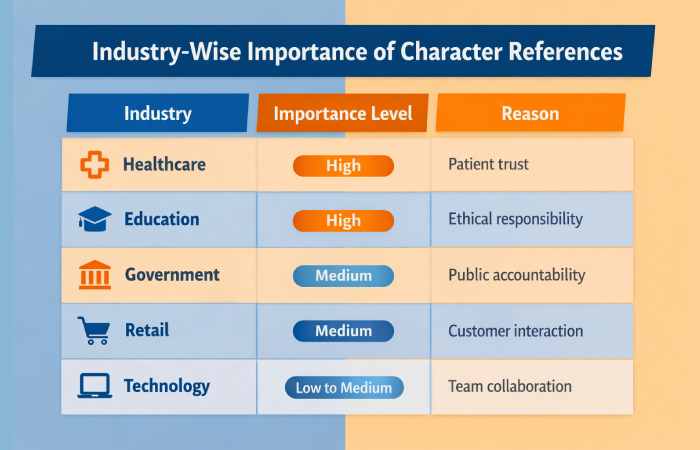
| Industry | Importance Level | Reason |
| Healthcare | High | Patient trust |
| Education | High | Ethical responsibility |
| Government | High | Public accountability |
| Retail | Medium | Customer interaction |
| Technology | Medium | Team collaboration |
| Creative roles | Low to Medium | Portfolio focus |
Employer Preference Data and Analysis
Based on aggregated hiring surveys and HR insights:
| Hiring Factor | Employer Preference (%) |
| Professional references | 84 |
| Character references | 67 |
| Skills assessments | 59 |
| Resume alone | 42 |
This shows that character references significantly influence hiring decisions.
Common Mistakes to Avoid
- Listing references without permission
- Including outdated contact information
- Using informal language
- Submitting fake or exaggerated references
- Adding references too early when not requested
Frequently Asked Questions
Is a character reference mandatory?
No, unless specified by the employer.
How many references should I include?
Two to three is ideal.
Can I write my own reference?
Only if the referee approves and signs it.
Should I upload references with every resume?
Not unless requested.
Final Resume Optimization Tips
- Align references with job requirements
- Inform references about the role you are applying for
- Keep reference documents updated
- Combine with a strong cover letter
- Maintain consistency across resume, LinkedIn, and applications
Conclusion
It is important to know what a character reference is in a resume as it will do you a favor in the hiring environment that we are in today. Resumes show your skill and experience; character references prove who you really are as a professional and a person.
Properly used character references may raise your trust level, enhance credibility and ensure higher probability of getting interviews, particularly when you are just starting your career or are switching jobs.