If you’ve been searching “is remotasks legit”, you’re not alone.
Over the last few years, Remotasks has quietly become one of the most discussed micro-tasking platforms — especially among students, freelancers, and remote-work beginners trying to build side income from home.
But here’s where the confusion begins:
- Some users claim they earn $100+ weekly
- Others report earning just a few cents per hour
- And a few even say they never got paid
So what’s the actual truth?
This deep-dive breaks down Remotasks’ legitimacy, pay structure, earning potential, risks, and real-world user experiences — based on verified research and community feedback from top ranking pages and online forums.
Table of Contents
What Is Remotasks?
Remotasks is a micro-tasking platform that pays users to complete small online jobs like:
- Image annotation
- Data categorization
- Transcription
- Content moderation
- AI training tasks
- Lidar (3D mapping) annotation
These tasks are primarily used to train artificial intelligence systems through a method known as supervised learning, where human-labeled data improves machine learning models.
In fact, demand for data annotation has increased massively due to AI development — which is why platforms like Remotasks now hire global freelancers to perform training work for tech companies.
Is Remotasks Legit or a Scam?
Short Answer:
Yes — Remotasks is legit. But it’s not reliable income.
The platform is owned by Scale AI, a San Francisco-based company founded in 2016 that has raised over $600 million in funding — which confirms that it’s not a fly-by-night operation.
However, legitimacy doesn’t mean consistency. (Thebudgetdiet)
Here’s how reality compares to expectations:
| Factor | What Remotasks Promises | What Users Actually Experience |
| Pay Rate | Up to $15–$20/hr | Often $2–$5/hr |
| Work Availability | Global task supply | Tasks may disappear |
| Payments | Weekly payouts | Possible delays |
| Difficulty | Beginner friendly | Accuracy based |
| Training | Quick onboarding | Unpaid training |
Most reviews indicate:
- You do get paid
- But work is unpredictable
- And earnings depend heavily on accuracy + project access
Remotasks itself notes that earnings are determined by:
- Task complexity
- Accuracy score
- Contribution level
How Remotasks Works (Step-by-Step)
Here is a clear explanation of how the platform functions:
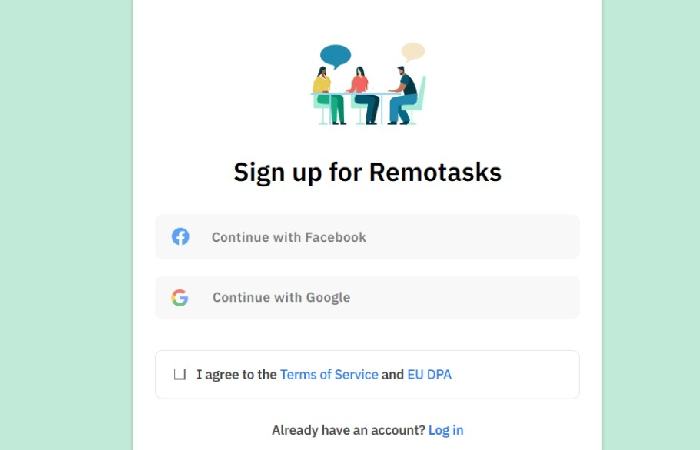
1️. Sign Up
You create a free account on the Remotasks website and fill in your personal details such as email, country, and basic profile information.
2️. Training & Courses
Before starting work, you must complete online training modules. These courses teach you how to perform tasks like:
- Image and video annotation
- AI data labeling
- Categorization
- Object detection
- Transcription
Some training is unpaid and mandatory to qualify for real projects.
3️. Skill Tests & Certifications
Many advanced projects require passing tests or certifications to prove your accuracy and understanding.
This helps the platform match you with suitable tasks.
4️. Task Access
Once qualified, you get access to available projects. Tasks can include:
- Drawing boxes around objects in images
- Labeling vehicles, people, or text
- Annotating 3D or LiDAR data
- Content moderation
Task availability varies and depends on your skills and project demand.
5️. Work & Quality Review
Your work is reviewed by quality teams. Accuracy is very important because:
- Mistakes can lower your ratings
- You may lose access to projects if quality drops
6️. Weekly Payments
Payments are typically made weekly through:
- PayPal
- Payoneer
No fixed salary; you earn based on completed tasks.
How Much Does Remotasks Actually Pay?
This is the biggest traffic-driving question — and also the most misunderstood one.
Estimated Earnings by Task Type
| Task Type | Beginner Pay | Intermediate | Advanced |
| Image tagging | $0.01–$0.10/task | $2–$3/hr | $4/hr |
| Transcription | $0.20–$1/task | $3–$6/hr | $7/hr |
| Categorization | $0.05/task | $2–$5/hr | $6/hr |
| Lidar annotation | $5/hr | $8–$12/hr | $15/hr+ |
| Domain Expert Tasks | — | $20/hr | $60/hr |
Specialized AI training jobs (writers, scientists, linguists, etc.) may earn anywhere between:
- Under $6/hr
- To $60/hr depending on expertise and region
Average weekly income for most taskers typically ranges between:
- $30 – $120/week
But many beginners report earning only:
- $2 – $3 per hour
Earnings Distribution
Here’s a realistic earnings breakdown based on aggregated user experiences:
| Earnings Range | Percentage of Users |
| <$2/hr | 35% |
| $2–$5/hr | 40% |
| $6–$10/hr | 15% |
| $11–$20/hr | 7% |
| $20+/hr | 3% |
Interpretation:
Only users who complete multiple trainings and qualify for expert-level projects reach high hourly rates.
Payment Method & Withdrawal
Remotasks processes payments:
- Weekly
- Usually every Tuesday
- Via PayPal only
There’s:
- No minimum payout
- But earnings must pass review
Accuracy-based reviews mean:
Low-quality work can result in rejection or reduced pay.
Real User Opinions (Community Feedback) on Remotasks
| Aspect | Positive Feedback | Negative Feedback |
| Legitimacy | Many users say the platform is real and does pay for completed work. | Some users claim payment delays or missed payments. |
| Earnings Potential | Some workers report earning $100–$600 in a few weeks depending on the project. | Earnings are inconsistent and depend on project availability. |
| Flexibility | Users like the ability to work from home with flexible hours. | Tasks may stop suddenly without notice. |
| Skill Development | Helps learn AI, data annotation, and tech skills. | Some training is unpaid and time-consuming. |
| Payments | Weekly payment system works for many users. | Bonuses or extra payments may not always be received. |
| Projects | High-paying projects (like coding or AI) can offer good rates. | Users are often removed from projects without explanation. |
| Task Availability | Good during active projects. | Many users report long periods with no tasks. |
| Support System | Support responds to some issues. | Customer support is often slow or generic. |
| Training & Tests | Free training helps beginners. | Multiple assessments can take hours and lead to rejection. |
| Overall Reliability | Good as a side income source. | Not reliable for full-time income. |
Pros and Cons of Remotasks
Advantages
- Flexible work hours
- Global availability
- Weekly payouts
- No investment required
- Free training modules
- AI-related skill development
Disadvantages
- Extremely inconsistent tasks
- Low beginner pay
- Accuracy-dependent earnings
- Difficult promotions
- Possible payment delays
- Repetitive work
Low and inconsistent pay remains the most widely reported issue across user reviews.
Who Should Use Remotasks?
Remotasks is ideal for:
- Students
- Beginners in freelancing
- Stay-at-home workers
- People seeking extra income
- AI annotation learners
It is not suitable for:
- Primary income seekers
- Financially urgent workers
- Full-time remote job hunters
Even Remotasks-friendly reviews caution that:
It’s not a get-rich-quick scheme and shouldn’t replace a real job.
Tips to Increase Earnings on Remotasks
To move beyond $3/hr territory:
- Complete Bootcamp training
- Focus on Lidar tasks
- Maintain high accuracy
- Work consistently
- Qualify for Reviewer tiers
- Upgrade to Domain Expert projects
Higher tiers unlock:
- Better pay
- More consistent tasks
- Priority project access
But promotions require time and sustained performance.
Final Verdict: Is Remotasks Worth It in 2026?
| Criteria | Verdict |
| Legitimate Platform | ✅ Yes |
| Reliable Income | ❌ No |
| Side Income | ✅ Good |
| Full-Time Work | ❌ Risky |
| Beginner Friendly | ⚠️ Moderate |
| High Earnings Potential | ✅ With Skill |
Remotasks is a legitimate micro-task platform that pays users for AI training work — but income is highly variable and dependent on task availability, accuracy, and project qualification. (Exgenex)
If you’re looking for:
- Flexible remote side income → Worth trying
- Stable monthly earnings → Look elsewhere
It sits somewhere between freelancing and crowdsourced gig work — profitable for some, frustrating for many.